

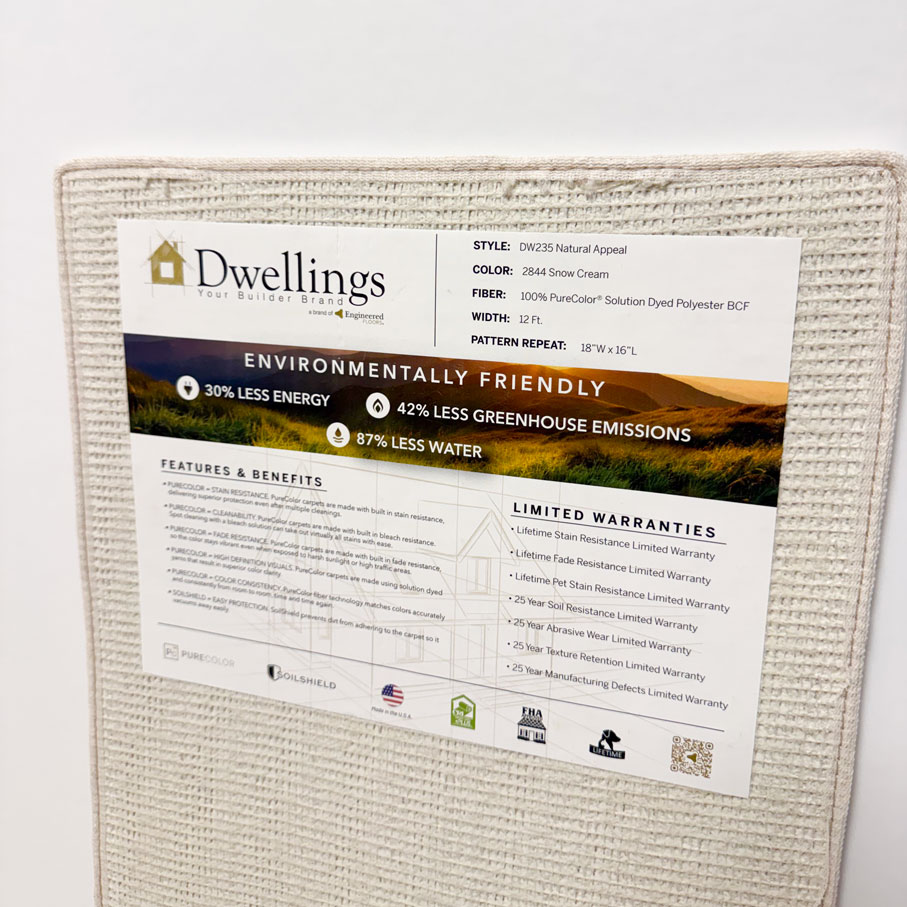
For residential carpet brands, labels may be a small part of the finished program, but they can create real delays when they are not available fast enough. Campbell’s customers were running into that problem with labels for individual rugs and sample pieces. They needed short runs and fast turnaround.
Campbell saw that its existing setup was not built to meet that need at the level customers were asking for. Rather than work around the limitation, the company chose to invest in a new digital press designed for short runs and faster delivery.
Campbell’s residential carpet customers had a straightforward problem: they could not get labels for individual rugs and sample pieces quickly enough.
That created a bottleneck in programs that depended on timely labeling to move forward. The issue was not simply print quality. It was speed, flexibility, and the ability to handle short runs efficiently.
Customers already knew Campbell for quality, responsiveness, and reliability. But at the time, Campbell did not yet have the digital printing automation needed to compete effectively in this category of label work.
Campbell chose to invest in a new digital press built for short, more flexible runs.
That investment gave Campbell the ability to produce labels more efficiently and respond faster to the needs of residential carpet customers. Instead of trying to push this work through a process that was not built for it, Campbell added equipment that matched the job more closely.
The decision also reflected a broader philosophy. Campbell is not trying to be everything to everyone. The goal is to be the print partner customers can rely on across the broader mix of premium print needs that support their business. When customers need something beyond Campbell’s existing capabilities, the company looks carefully at whether it makes sense to invest in a solution that supports them at the same level of quality, service, and responsiveness they already expect.
In this case, that meant adding a capability that allowed Campbell to support another important part of the customer’s business, not just the programs it had historically produced.
With the new digital capability in place, Campbell was able to deliver labels in about half the time customers had been receiving before, and in some cases faster.
That improvement helped remove a recurring bottleneck for residential carpet customers who needed labels for individual rugs and sample pieces. Campbell’s reputation for quality, responsiveness, and reliability helped open the door. The added speed made Campbell a stronger fit for the work and helped turn that opportunity into business.
The investment also reinforced Campbell’s role as a broader print partner to its customers. Rather than limiting the relationship to one category of work, Campbell expanded its capabilities to better support the wider range of print needs surrounding its customers’ programs.
Engineered Floors, Kane Carpet, and Prestige Mills were among the customers this investment was intended to better support.
For customers, the benefit was practical: faster access to labels, better support for short-run work, and a supplier that could better match the pace their programs required.