

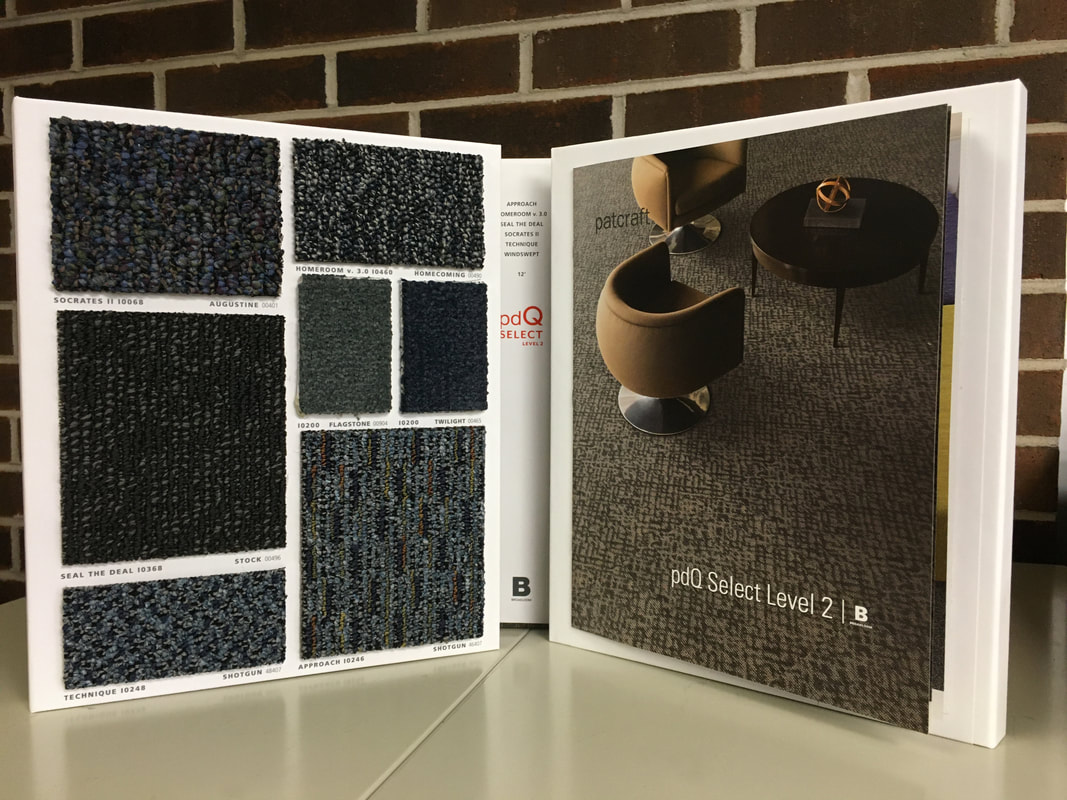
A premium sample book has to do more than look good on a shelf. It has to hold together in the field. That becomes difficult when the flooring itself resists glue. Over time, a sample can lift, shift, or fall out—an obvious failure for the brand and an awkward moment for the sales rep using the book with a client.
Campbell Printing developed this format for customers dealing with exactly that issue. Instead of relying on glue alone, the construction uses precision-cut paperboard slots and a thin top sheet that frames the sample while helping hold it securely in place.
Some floor covering materials simply do not stay put in a conventional sample book. Customers came to Campbell after other vendors had tried and failed to keep one of their materials permanently secured.
The concern was straightforward. No one wanted a sales rep opening a book in front of a client and finding that a sample had shifted or fallen out. The book still needed to present the material well, but reliability came first. The sample had to stay in place through repeated handling while remaining visible and easy to touch.
Campbell reworked its removable tray expertise into a different construction for materials that resist glue. Each sample is set into precision-cut paperboard slots. A thinner sheet of paperboard is then applied over the top, creating a framed opening that leaves the surface exposed while helping hold the sample in place.
That change is what makes the format work. The sample is not simply glued to the page; it is supported by the structure of the book itself. The build is more involved than a standard mounted sample book, but for customers dealing with recurring glue failure, it offers a more dependable answer.
Campbell first produced this construction in a two-year program for a major flooring manufacturer and later brought it into a newer program with Tarkett. In both cases, the value was straightforward: a sample book that reduced the chance of field failure and gave sales teams more confidence carrying it into client meetings.
Feedback has centered on the added cost, but the format has continued to be used because it addresses the underlying concern: keeping the material secure in the book and reducing the risk of problems in the field.
For customers working with difficult materials, the result is a sample book that presents cleanly and holds up more reliably in front of a client.
Need a more reliable way to secure difficult flooring samples?
Talk to Campbell Printing about sample book formats designed for materials that do not hold well with standard glue methods.